The regional conflict centered on Iran has entered its second month, following military strikes against Iran by the United States and Israel amid the US-Iran negotiation process.
As the conflict spills over, the Strait of Hormuz—one of the world’s critical chokepoints for energy and shipping—remains under persistent pressure, with cascading effects including restricted navigation, vessel congestion, and volatile oil and gas prices continuing to escalate. While all parties remain locked in a standoff over a ceasefire and de-escalation, at least three countries—Malaysia, Pakistan, and Thailand—have publicly confirmed that they have separately engaged with Iran and secured passage arrangements allowing their relevant vessels to exit the Strait of Hormuz.
The reason the Strait of Hormuz commands the attention of global markets is straightforward. In submissions to the UN Security Council and the International Maritime Organization, Iran stated that recent hostilities have brought energy transportation through this waterway to a near standstill, even though the Strait normally handles roughly one�fifth of the world’s oil and liquefied natural gas shipments. International oil and gas prices have surged sharply and remained elevated since early March. Citing multiple institutions and analysts, Reuters has warned that Brent crude prices risk rising further above $150 per barrel in the short term if the Strait remains blocked. Macquarie and other institutions have even suggested that oil prices could spike to $200 per barrel should the conflict drag on and supply disruptions widen.
Over the first month of the conflict, various proposals for “reopening the Strait of Hormuz” have been widely discussed. However, based on current developments, official diplomatic outreach and selective clearance for certain vessels are emerging as a relatively realistic starting point that could yield the earliest breakthroughs.
On March 28 local time, Pakistan’s Deputy Prime Minister and Foreign Minister Dar announced that Iran had agreed to grant passage to an additional 20 Pakistani�flagged vessels through the Strait of Hormuz, with two ships permitted to transit daily thereafter.
Malaysia has also officially confirmed its passage arrangement. According to Xinhua News Agency on March 28, Malaysian Foreign Minister Mohamad stated that the Iranian government had allowed several Malaysian oil tankers stranded in the Strait of Hormuz to proceed. Malaysia further clarified that it had held multiple rounds of communications with Iran prior, and following a phone call between Malaysian Prime Minister Anwar and Iranian President Pezeshkian, Iran responded positively and approved the vessels’ passage. However, Malaysia also emphasized that even with clearance, the ships must await appropriate “transit windows”—indicating that the green light does not mean risks have been eliminated.
Thai Prime Minister Anutin publicly stated that, under the current agreement reached with Iran, Thai oil tankers can safely navigate the Strait of Hormuz. Thai Foreign Minister Sihasapa also announced that Thailand is proposing a special ASEAN Foreign Ministers’ Meeting to discuss measures to ease tensions.
Five Scenarios for the Future of the Strait of Hormuz
Marine insurance advisory firm Herminius has recently put forward five possible scenarios for the future of the Strait of Hormuz, with a common premise: any relatively stable reopening plan depends first on a halt to the military conflict between the United States, Israel, and Iran.

Scenario 1: Return to pre-conflict status
This is certainly the outcome markets hope for—a full restoration of normal, free navigation as it existed before the hostilities. Realistically, however, it is also the most difficult to achieve in the short term. It requires not only an end to fighting but also a relatively comprehensive political settlement among all parties. Even then, if mines or security hazards remain in the waters, subsequent mine clearance, verification, and the restoration of market confidence could still take months.
Scenario 2: Forcible reopening by military means
This approach involves external powers taking the lead to ensure navigation through escort missions or maritime military control. At present, this scenario is also unlikely to materialize in the near term. It would require the United States and Israel to militarily suppress Iran’s maritime threats, plus the willingness of more allies to bear the risks and costs—something for which there is currently no consensus within the West.
Scenario 3: Selective reopening of the strait
This is regarded as one of the realistic paths that may emerge over the medium to long term, and it represents a workable compromise. Put simply, through some coordination mechanism, only certain vessels, voyages, or cargoes would resume passage under specific conditions. This model is pragmatic, but again, it presupposes a ceasefire.
Scenario 4: Persistent ambiguity between “open” and “closed”
Iran has not officially announced a full closure of the strait, yet it retains significant flexibility and uncertainty through measures such as “allowing passage for non-hostile vessels,” “requiring coordination,” and “operating within transit windows.” For the shipping industry, this state is often more problematic than an explicit closure: in theory, passage is possible, but in practice, many may dare not attempt it.
Scenario 5: Full or de facto blockade of the Strait of Hormuz
This is a deeply concerning outcome, but at present, its probability is low. A complete, permanent shutdown would almost certainly trigger a strong external response, and the cost of removing threats and restoring navigation afterward would be extremely high. Rather than imposing a total blockade, Iran currently appears to derive greater strategic benefit from the international anxiety over the prospect of a blockade.
The escort plan is difficult to implement and is not a long-term solution.
Public discussions on escort operations in the Strait of Hormuz intensified significantly in mid-March. On March 12, U.S. Treasury Secretary Bessent stated that, if military conditions permit, U.S. forces could join an international coalition to provide escort protection for vessels transiting the strait. Subsequently, around March 16, the Trump administration sought support from European and other allies, but countries including Germany, Spain, and Italy indicated they were not prepared to deploy warships at this stage, and Japan also stated it had no current plans to send vessels. On March 26, France disclosed that it had contacted approximately 35 countries to discuss organizing a defensive mission in the Strait of Hormuz after the conflict ends, envisioning two phases: mine clearance and the restoration of commercial shipping. To date, relevant discussions have remained largely at the level of initiatives, consultations, and contingency planning, with no unified multinational escort mechanism established and put into operation.
The International Maritime Organization (IMO) has offered a more cautious assessment of whether escort operations can resolve the crisis. On March 19, IMO Secretary-General Dominguez stated that naval escorts cannot guarantee 100% vessel safety and are not a long-term, sustainable solution to the current crisis in the Strait of Hormuz. The IMO Council also encouraged the establishment of a temporary framework similar to a "maritime safety corridor" to assist merchant ships in evacuating from high-risk areas through peaceful, voluntary means. Dominguez further noted that only an end to the conflict will prevent shipping from continuing to be a victim of collateral damage.
"Vessels of non-hostile nations allowed to transit" with ambiguous definition
According to Iran’s current official position, the Strait of Hormuz has not returned to “full, unrestricted free navigation,” but remains under a conditional, selective clearance regime. Iran has informed the UN Security Council and the International Maritime Organization that so-called “non-hostile vessels” may transit the Strait of Hormuz, provided they coordinate with Iranian authorities and do not support military operations against Iran. In other words, this arrangement does not apply to all vessels; rather, it amounts to limited access granted to certain countries and specific ships under conditions set by Iran.
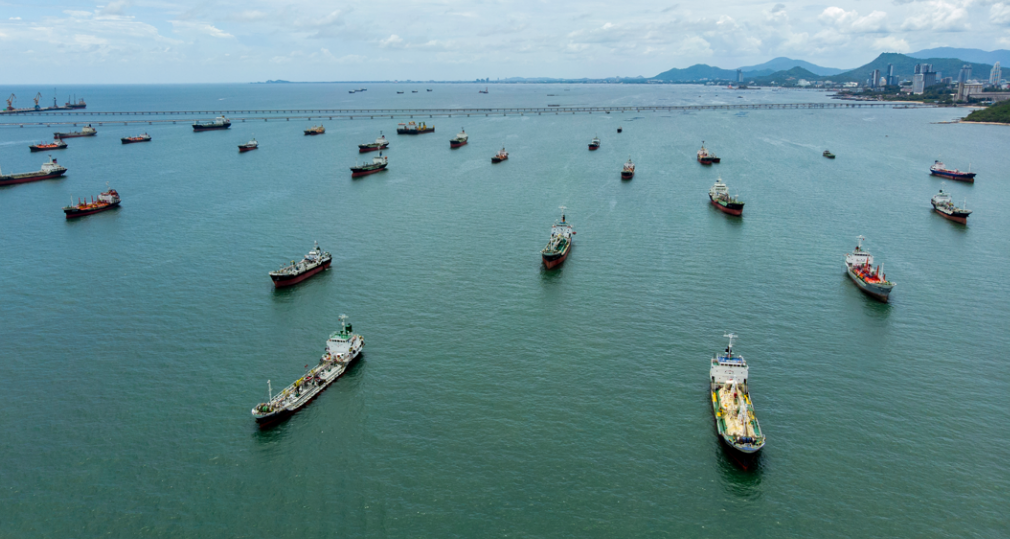
This definition itself carries considerable uncertainty. Which vessels qualify as “non-hostile”? Are they judged by flag, ownership background, charter relationships, cargo destination, or political stance? The outside world has not seen a set of public, clear, and stable unified criteria. For this reason, the arrangements currently obtained by Malaysia, Pakistan, and Thailand are closer to individual passage approvals secured through diplomatic coordination, rather than a full return to normal commercial shipping in the Strait of Hormuz.
Recent actual shipping dynamics further confirm that such “permission to transit” remains quite limited. On March 27, two China-related container ships turned back after attempting to exit the Strait of Hormuz, even though Iran had previously stated that vessels from “friendly countries” such as China could pass safely. This demonstrates that, despite principled approval statements, significant uncertainty still exists when implemented on specific voyages.
Recent statements from liner companies also reflect this cautious outlook from a commercial perspective. In a recent customer update, Maersk stated that the Strait of Hormuz is “unlikely to reopen in the short term” and expects the impact of the Middle East situation and strait closure on its operations and network to persist at least until the end of the second quarter. For Hapag-Lloyd, CEO Rolf Habben Jansen publicly stated that the current Middle East crisis is adding approximately $40–50 million in weekly extra costs, mainly from fuel, insurance, and container storage; he also noted that such cost levels are unsustainable in the long run. For shipping companies, this means that even with partial clearance, the market has not yet regarded it as a signal of “return to normalcy.”
Another noteworthy variable is the further involvement of the Houthi movement. On March 28, the Yemeni Houthi movement announced its first attack on Israel in the current conflict, marking its formal entry into the month-long hostilities. Meanwhile, the United States is reinforcing its military presence in the Middle East. For the shipping market, this means the risks in the Strait of Hormuz are no longer limited to direct confrontation between Iran and the US-Israel bloc, but are spilling over into a broader regional maritime security crisis. Houthi involvement will further amplify the potential for coordinated escalation of security tensions across the Gulf, Arabian Sea, and even the Red Sea.
Therefore, while the passage approval for the three countries’ vessels does signal a degree of de-escalation, it only indicates the emergence of limited transit windows in the Strait of Hormuz, not an end to the crisis. Fighting continues, and regional maritime security risks have not disappeared. For the market, whether transit can be meaningfully expanded next depends on two key factors: first, whether the conflict de-escalates, and second, whether Iran broadens the scope of “non-hostile vessels” eligible for passage. At least for now, the Strait remains far from a full return to normal commercial shipping.